
Thu, 05/02/2026 - 19:45
International Winter Waterbird Census: Observation Results in the Caspian Sea
As part of activities marking the 60th anniversary of the International Waterbird Census and the 55th anniversary of the Ramsar Convention, Turkmenistan conducted large-scale winter waterbird counts, including extensive surveys of the Caspian Sea. The results confirmed the exceptional importance of the Caspian Sea as one of the most significant wintering and migration areas for waterbirds in Eurasia.
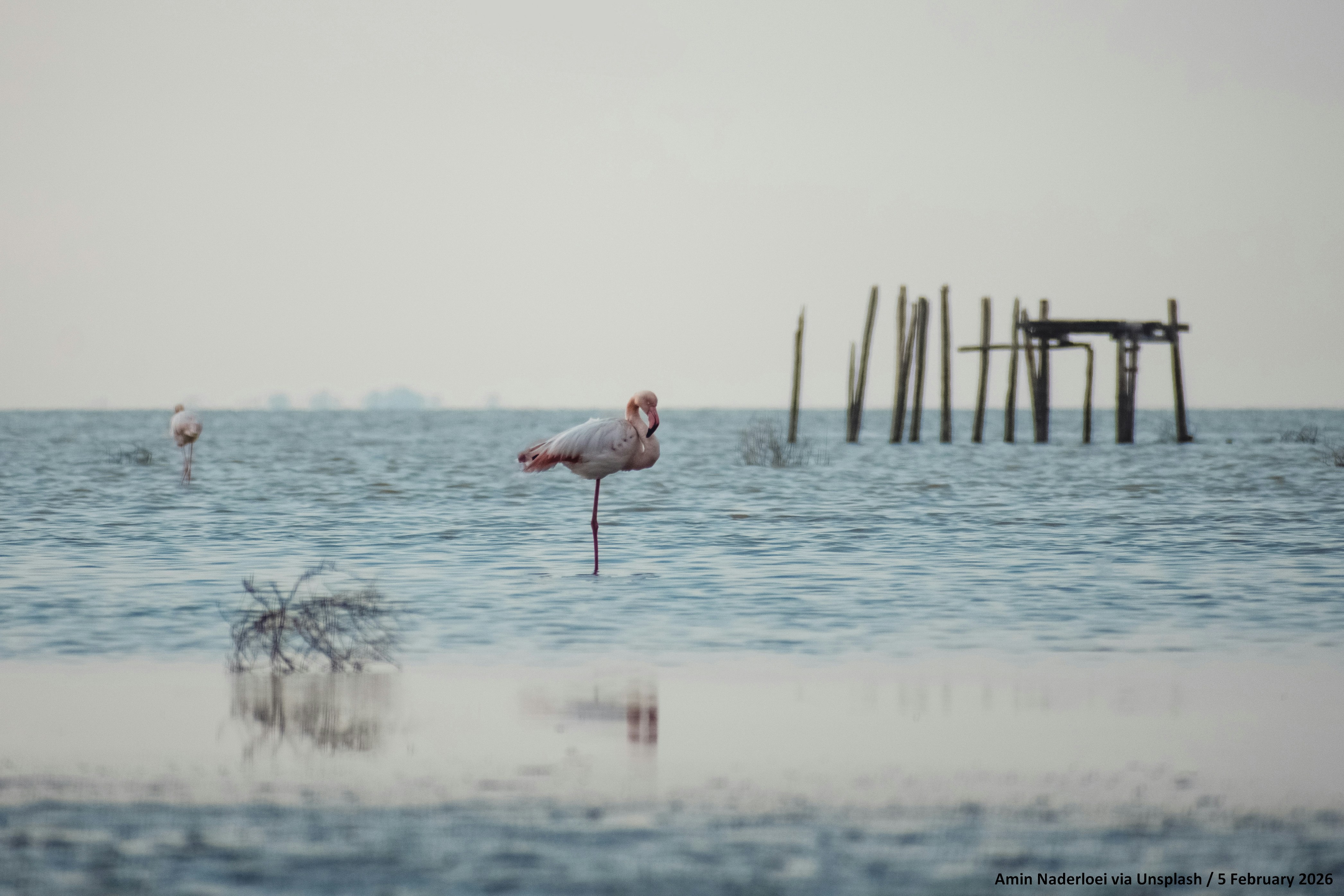
Since 5 January, Turkmenistan has been organizing the International Winter Waterbird Census, one of the key events associated with World Wetlands Day, observed annually on 2 February. The counts have been carried out for 60 consecutive years under the auspices of Wetlands International, a partner organization of the Ramsar Convention. The surveys involved ecologists, ornithologists, staff of state nature reserves, as well as volunteers who joined this global monitoring initiative.
Special attention during the surveys was given to the Caspian Sea, where the majority of wintering waterbirds in the country are concentrated. Observations were conducted using modern optical equipment, including high-resolution binoculars and photographic cameras. The counts recorded numerous bird species, including coots, mallards, red-crested and common pochards, cormorants, grebes, herons, white-tailed eagles, black-headed gulls and other waterbird species.
In total, 54 wetlands and their sections were surveyed across Turkmenistan. As a result of the counts, 43 bird species were identified while 405,595 individual birds were recorded. The most abundant species included the coot, mallard, tufted duck, red-crested pochard and the common pochard, which is listed in the national Red Book.
Particular attention was drawn to the record numbers of greater flamingos wintering on the Caspian Sea. This year, more than 33,000 individuals were recorded within the Hazar State Nature Reserve, representing the highest figure ever documented during national counts and a substantial increase compared to previous surveys.
The results indicate that, despite the reduction in the area of certain wetlands of the Caspian Sea due to declining water levels and climate-related changes, their overall ecological condition remains favourable for the migration and wintering of waterbirds. The findings will be incorporated into the national statistical report and presented in early February in Ashgabat during a scientific conference held in connection with World Wetlands Day.
The conduct of international waterbird counts constitutes an important element of Turkmenistan’s international obligations under the Ramsar Convention, to which the country acceded in 2009. The monitoring results for the Caspian Sea are of key importance for the effective management of protected areas, the strengthening of the status of key ornithological sites, and the continued enhancement of measures aimed at conserving the biodiversity of wetland ecosystems.